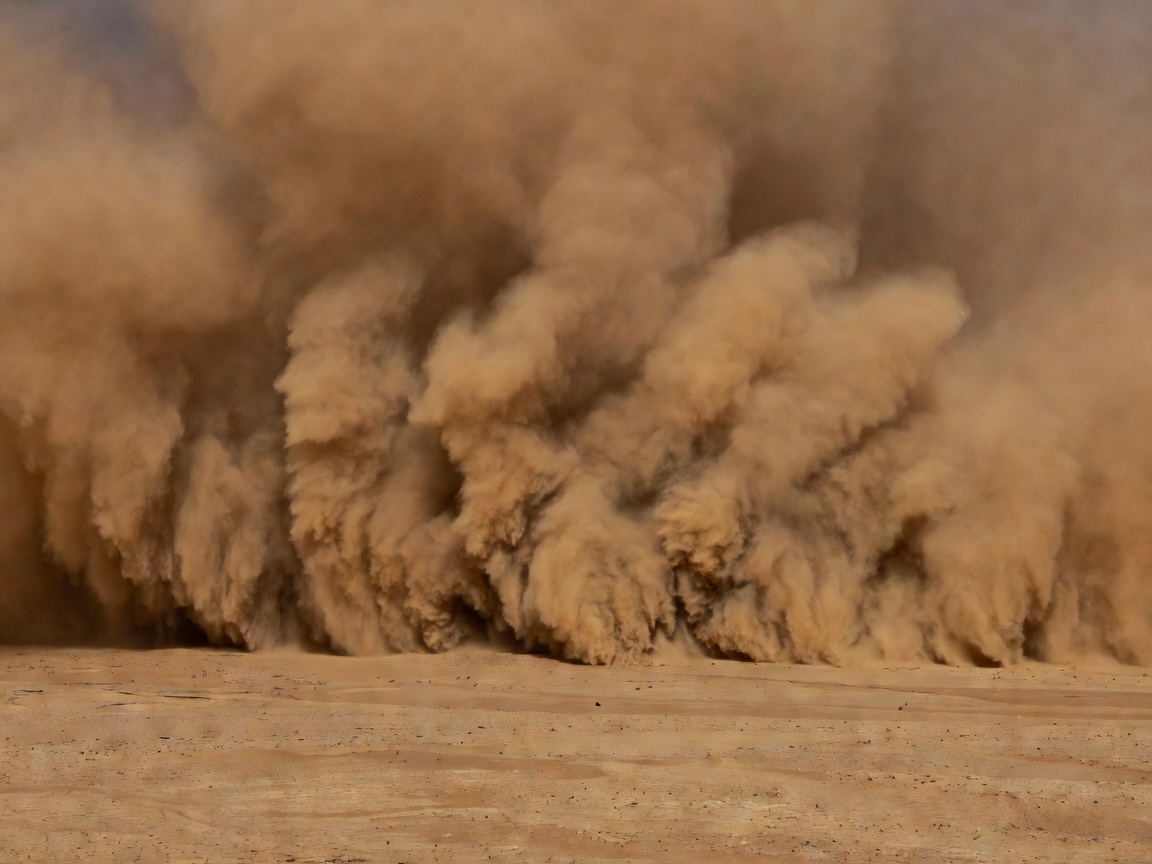
Haboobs represent one of the most visually stunning yet hazardous boundary layer weather phenomena on Earth. Formed by severe convective downbursts striking hyper-arid terrain, these atmospheric density currents lift millions of tons of desert sediment thousands of feet into the air.
Evaporative Cooling and Outflow Front Mechanics
As rain falls from high-based desert thunderstorm cells into exceptionally dry sub-cloud layers, intense rain-evaporative cooling occurs. The cooled, dense air plunges downward at speeds up to 70 knots, slamming into the desert floor and expanding outward as a turbulent gust front.
Static Electricity and Dust Aerosol Ionization
Recent telemetry collected by our expedition teams in North Africa confirms that intense friction between suspended quartz particles generates intense static electric fields inside the haboob wall, exceeding 15 kV/m. This electrical charge stabilizes particle suspension and alters local radio communications.
Field Survival & Mobile Research Navigation
Navigating through a Haboob reduces visual visibility to absolute zero within seconds. Expedition vehicles must be equipped with dual air filtration systems to prevent turbine and combustion intake lockage from extreme ambient particulate loads.